Land Financing: How to Purchase and Secure Vacant Land Loans
Land financing, how to advice for securing land development financing with the lowest land loan rates and terms available!
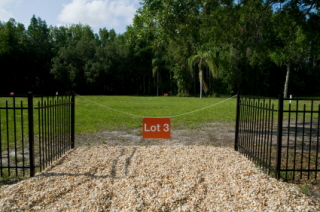 Have you been wondering how to put your land financing in place for your custom home project?
If you don't have deep pockets to pay all cash, loans for land is a must because you definitely want to save your reserve cash for your home building project. If you have purchased a home previously, then you will be familiar with the vacant land loans process because it's vitually the same as buying a home minus a few details.
Bankers have become increasingly conservative and vacant land financing could prove to be a tough sell. They may want you to fill out one land contract form after another. There are quite a few banks who won't work with you unless the land has an improvement (structure) on the property.
So.....what do you do?
If you find banks aren't willing to work with you, you have Six options:
- Find a bank yourself that will grant you loans for land
- Find a mortgage broker to assist in the search of a bank that will finance your cheap vacant land
- Pay all cash for your land (not an option if your cash strapped)
- Apply for government land grants from your county, state, and federal government (to be granted government money, your property will have to benefit the public in whatever way the particular grant describes)
- Search through government land auctions to see if you can purchase land cheaply that the government doesn't want
- Find private loans for land through a family member, a hard money lender (short term - high interest lender), or a high net worth individual and negotiate terms with them
- Work out a financing arrangement with the sellers to hold a mortgage on the land (if they own the land outright)
Now it's time to select the area and land where you want to put your home......right?
Not so fast my friend, we need to discuss some basics before you go out to search and conquer!
Basics? What basics, it's land.....right? Well, yes and no. I'm going to show you information about cheap vacant land and vacant land loans
from an appraisers perspective! You will learn to:
- Determine how many square feet are in any acreage with this land area calculator
- Distinguish between land and site
- Recognize the four tests for highest and best use of a site and why they're important
- Identify significant information that can be derived from the market area surrounding the subject site
How do you distinguish between land and site?
Land is unimproved real estate that is raw or undeveloped. In other words, the property is in its natural state. If your going to pursue
the purchase of raw land, always have a soil expert perform a
perc test
to make sure the land will be buildable.
A site is land which has been improved and ready for construction. It has been excavated (plowed) with increased utility which includes
water,
drainage field
(sewer systems), utility lines, and access roads.
Land and sites are valued as if vacant and available to be put to their highest and best use.
What are the four tests for highest and best use and why are they important?
The four test for highest and best use of a site as though vacant are:
- Legal permissibility
- Physical possibility
- Financial feasibility
- Maximum productivity
Why is this important?
It's how an appraiser evaluates your lot to determine it's worth!
The items to consider when performing a legal permissibility test are:
- Which uses are permitted by zoning
- Which uses are prohibited by Deed restrictions - public and private, setback requeirements
- Covenants
- Building Code restrictions that eliminate the possibility of demolishing an improvement
- Easements that prevent where you can place your home on your lot
- Environmental regulations that prohibit any development
Physical possibility covers the question of what improvements (type of home) can be allowed on a site, provided legal permissibility.
Financial feasibility is an evaluation to determine whether there is enough demand (sales) in the area to sufficiently justify the cost
of the lot. If not, the purchase price for land financing will not be financially feasible.
The items to consider when performing a financial feasibility test are:
- What are the buyers buying in this market area (neighborhood)?
- What are the number of days land stays on the market in this market area?
- What kind of land financing is available to you?
- Are developers or owner builders in this area realizing a profit or sizable equity?
The last test of highest and best use is maximum productivity. Whatever structure will produce the highest site value is the measure
of maximum productivity of a site as though vacant.
Understand that you do not have to perform these test yourself, but it is always helpful to know how an agent or appraiser comes to value
cheap vacant land.
I know, I know.......that was a lot to cover but it really was important for you to understand.
Now that your land financing is taken care of, Let's search and conquer for your new home site!
You Might Also Like:
Home Design Floor Plans
|
Green Home Designs
|
Boat Home Plans
|